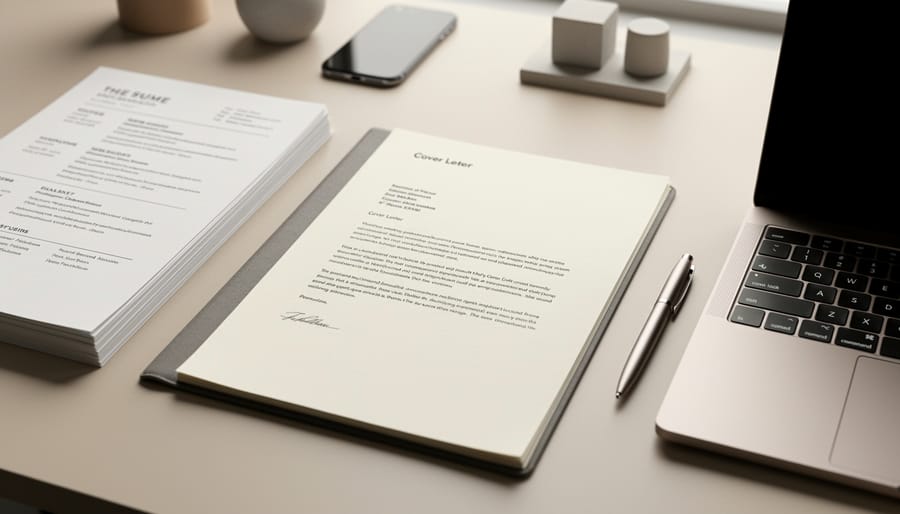
A standout cover letter can triple your callback rate, but only if you know what “standout” actually looks like in practice. The most effective cover letters share a proven structure: they open with a compelling hook that connects your experience to the employer’s specific needs, demonstrate measurable achievements in 2-3 concise body paragraphs, and close with a confident call to action. This approach consistently outperforms generic templates because it treats your application as a targeted pitch, not a formality.
The difference between a cover letter that gets you an interview and one that gets ignored comes down to specificity and relevance. Hiring managers spend an average of six seconds scanning each application. Your cover letter needs to immediately answer their core question: why should we interview you instead of the other 200 applicants? Understanding the cover letter impact means recognizing that vague statements about being a “hard worker” or “team player” won’t cut it.
Real examples beat theory every time. That’s why this guide provides five annotated cover letters from actual successful applications: a recent graduate breaking into tech, a career changer pivoting from teaching to marketing, a professional seeking advancement, an internal candidate applying for a promotion, and a creative professional in design. Each example shows exactly what works and why, so you can adapt the strategies to your own situation. You’ll see the precise language that captures attention, the structure that keeps readers engaged, and the closing techniques that generate responses.
What You Need Before You Start Writing
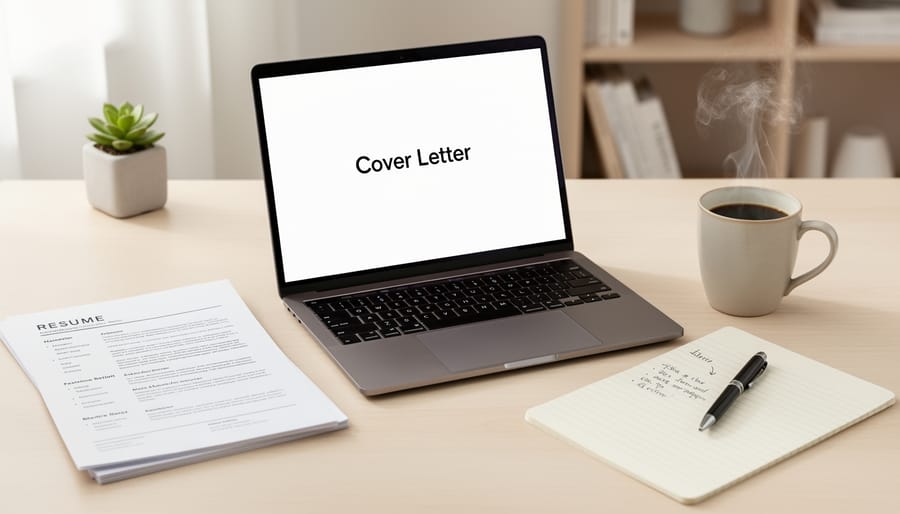
Before you open a blank document, take time to assemble the right materials. Starting with everything in front of you prevents the frustration of interrupting your writing flow to hunt down a company name or dig through old performance reviews.
Think of this preparation phase as part of your broader job search strategy. The stronger your foundation, the faster and more confidently you’ll write. You’ll need:
- The complete job posting with all required and preferred qualifications highlighted
- Company research notes covering mission, recent news, products, and culture signals from their website and social media
- Three to five specific achievement examples with measurable results from your work history
- Hiring manager’s name and correct spelling, plus HR contact information if the manager isn’t listed
- Your current resume to ensure consistency in dates, titles, and accomplishments
- A distraction-free writing tool, whether that’s Google Docs, Microsoft Word, or a plain text editor
Spend twenty minutes on company research beyond skimming their About page. Read their latest blog posts, check their LinkedIn updates, and look for any industry news mentioning them in the past six months. This depth lets you reference specifics that prove you’ve done your homework rather than copying boilerplate praise.
For your achievement list, focus on outcomes tied to skills the job posting emphasizes. If they want project management experience, note the project you delivered two weeks early that saved the team 15 hours of rework. Concrete numbers and clear before-and-after scenarios give you material to pull from as you write.
Get the hiring manager’s name right. Check LinkedIn, the company directory if it’s public, or call reception to confirm spelling and title. A personalized greeting immediately sets your letter apart from the stack addressed to “Dear Hiring Manager,” and getting it wrong does the opposite.
Critical Mistakes to Avoid (Before You Write a Word)
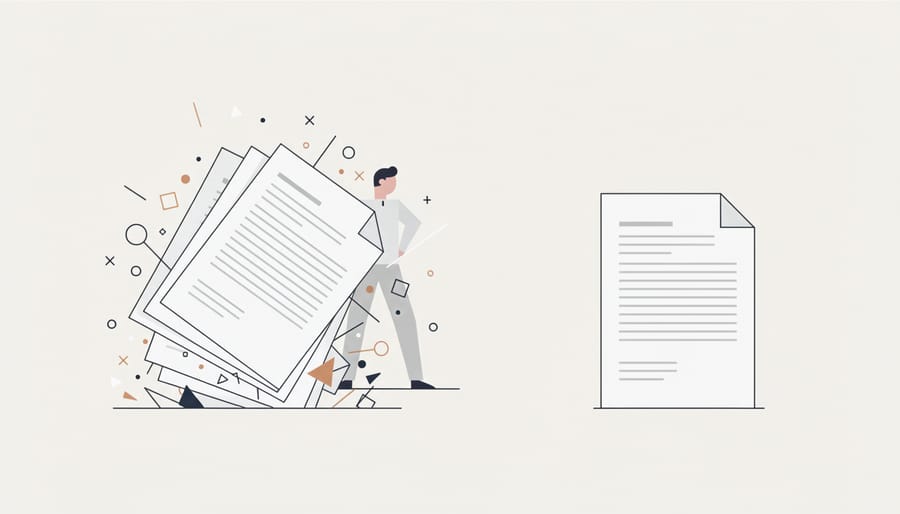
Before you type a single word of your cover letter, understand that certain mistakes will get your application rejected before anyone reads past the first paragraph. These aren’t stylistic preferences, they’re disqualifying errors that signal carelessness or lack of genuine interest.
Generic Templates Kill Your Chances
Recruiters can spot a fill-in-the-blank template instantly. Phrases like “I am writing to express my interest in the [position] at [company]” or “I believe I would be a great fit for your team” scream copy-paste. These openings tell the reader you’ve sent this exact letter to dozens of companies. Even if you’ve swapped out the company name, generic language reveals you haven’t invested time in this specific application.
Company Name Errors Are Unforgivable
Getting the organization’s name wrong, whether through misspelling, using an outdated name, or confusing it with a competitor, instantly disqualifies you. This includes subtle errors like writing “John Deere” instead of “Deere & Company” or “PWC” instead of “PwC.” Double-check letterhead, recent press releases, and the company’s own website for the exact legal name and current branding.
Wrong Contact Information Wastes Everyone’s Time
Addressing your letter to someone who left the company months ago or using “To Whom It May Concern” when the hiring manager’s name is listed in the job posting demonstrates lazy research. Spend five minutes on LinkedIn or the company website to find the correct person. If you genuinely can’t locate a name after thorough searching, use “Dear Hiring Manager” or “Dear [Department] Team”, but this should be your last resort.
Length Violations Signal Poor Judgment
Cover letters that exceed one page suggest you can’t prioritize information or respect the reader’s time. Equally problematic are three-sentence letters that provide no substance. The standard is three to four concise paragraphs on a single page. Anything more looks unfocused; anything less appears dismissive.
Tone Mismatches Reveal Culture Ignorance
A stiff, overly formal letter to a startup or a casual, emoji-filled one to a law firm both indicate you haven’t researched the company culture. Review the job posting’s language, check the company’s social media presence, and read employee reviews to gauge appropriate tone. Your voice should be professional yet adaptable to the organization’s style.
The Step-by-Step Cover Letter Writing Process
Step 1: Craft Your Opening Hook
Your opening paragraph has one job: make the hiring manager want to keep reading instead of moving to the next application. Skip the “I am writing to apply for” preamble. They know why you’re writing.
Start with what you bring to this specific role. The formula that works: state the position, connect one compelling qualification, and hint at why this company matters to you. All in two to three sentences.
What works: “As a data analyst who reduced customer churn by 23% through predictive modeling at TechStart, I’m excited to bring this same strategic approach to the Senior Analyst role at DataCorp. Your recent expansion into healthcare analytics aligns perfectly with my background in patient data systems.”
This opening immediately shows relevant impact, names the role, and demonstrates company knowledge.
What doesn’t work: “I am excited to submit my application for the position I saw posted on LinkedIn. I believe I would be a great fit for your team because I am a hard worker with excellent communication skills.”
This says nothing specific and could apply to any job. The hiring manager learns nothing about your value in those two sentences.
Lead with your strongest, most relevant credential. Generic enthusiasm earns you nothing. Specific value earns you the next paragraph.
Step 2: Demonstrate Your Fit With Specific Examples
The body of your cover letter needs to prove you can do the job, not just claim it. This is where you match your experience directly to what the employer needs.
Start by identifying two or three key requirements from the job posting. Don’t try to address everything. Pick the qualifications they emphasize most, then tell a mini-story for each one that shows you’ve delivered results in that area.
Use a streamlined STAR approach. You don’t have the space for full situation descriptions, so condense it: briefly state the challenge or context (one sentence), explain what you did, and emphasize the measurable result. For example, instead of writing “I have strong project management skills,” write: “When our team faced a compressed timeline for a product launch, I reorganized our workflow and coordinated across three departments, delivering the project two weeks early and 8% under budget.”
The result is the most powerful part. Numbers grab attention: percentages, dollar amounts, time saved, people managed, or growth achieved. If you can’t quantify, describe the impact: a process you improved, a problem you solved, or recognition you earned.
Connect each example explicitly to the job description. If they want someone who can “manage cross-functional teams,” use that exact phrase when describing your achievement. This creates an obvious throughline between their needs and your capabilities, making the hiring manager’s decision easier.
Step 3: Show You Understand the Company
Showing you’ve researched the company proves you’re serious about this job, not just any job. But there’s a trick: weave your insights into your narrative rather than listing facts you found on their website.
Start by identifying one specific aspect of the company that genuinely resonates with you. Maybe it’s their recent product launch, their approach to remote work, or a value they demonstrate through action. Then connect it to your own experience or priorities.
Instead of writing “I admire your commitment to sustainability,” try “Your 2025 carbon-neutral initiative aligns with my work leading green operations at my current company, where we reduced waste by 40%.” You’ve demonstrated knowledge while making it relevant to what you bring.
Look for concrete details that reveal you understand their current challenges or direction. Mention a recent award, a pivot they’ve made, or a market they’re entering. Reference their blog, a founder’s LinkedIn post, or an industry article about them. These details signal you’ve done homework beyond skimming the About page.
The goal is making the hiring manager think “This person gets us” without ever saying those words directly. Quality beats quantity here. One meaningful, specific reference outweighs three generic compliments about their “innovative culture.”
Step 4: Close With a Clear Call to Action
Your closing paragraph should accomplish three things in two to three sentences: reaffirm your interest, reference a specific next step, and thank the reader for their time. The goal is to sound confident and forward-looking without putting words in the hiring manager’s mouth.
Start by restating your enthusiasm in concrete terms. Rather than “I’m very excited about this opportunity,” try “I’m eager to contribute to [specific company initiative you mentioned earlier].” This ties back to something real and shows you’re envisioning yourself in the role.
Next, suggest a next step that assumes movement forward while respecting their process. Effective language includes “I’d welcome the opportunity to discuss how my experience aligns with your team’s goals” or “I look forward to exploring how I can contribute to [specific project or challenge].” Avoid presumptive phrases like “I’ll call you next week” or passive ones like “I hope to hear from you.”
Close with a brief thank you that acknowledges their time. “Thank you for considering my application” works perfectly. Keep it simple and sincere. Then add your professional sign-off (Sincerely, Best regards) and name.
The worst closings either apologize for taking up time or make demands about timelines. Your closing should leave them thinking about what you’d bring to the role, not about your neediness or overconfidence.
Step 5: Edit and Customize for Each Application
Your first draft is never your final version. Even the strongest cover letter needs refinement before it reaches a hiring manager’s inbox. This editing phase transforms a solid draft into a submission that stands out.
Start by stepping away from your letter for at least a few hours, ideally overnight. Fresh eyes catch what rushed editing misses. When you return, follow this systematic review:
- Read your entire letter aloud to catch awkward phrasing, repetitive words, and sentences that don’t flow naturally when spoken.
- Verify every company-specific detail, spelling of the organization name, hiring manager’s name and title, and any references to company initiatives or values.
- Check that each paragraph connects clearly to the job description, cutting any content that doesn’t directly support your candidacy for this specific role.
- Trim ruthlessly to stay within three-quarters of a page, removing filler phrases like “I believe” or “I feel” that weaken your statements.
- Review formatting for consistency in font (10-12pt standard), margins (0.75-1 inch), and spacing, ensuring the letter looks polished on screen and when printed.
- Run a spell-check, then manually proofread for errors that automated tools miss, especially with names and technical terms specific to the industry.
The customization piece matters more than many applicants realize. Generic letters get rejected because hiring managers spot them immediately. For each application, adjust your opening hook to reference the specific role title and what drew you to this particular opportunity. Swap examples to highlight the achievements most relevant to each position’s priorities. If you’re writing remote job cover letters emphasize your self-management skills and remote work experience rather than your commute availability.
Save each customized version with a clear filename like “YourName_CompanyName_Position_CoverLetter.pdf” so you can track what you sent where. This organization prevents embarrassing mix-ups and helps you reference your pitch if you get an interview.
5 Effective Cover Letter Examples That Work
Example 1: Recent Graduate Entering the Job Market
Jordan Martinez
jordan.martinez@email.com | (555) 123-4567 | LinkedIn:
March 15, 2026
Ms. Sarah Chen
Hiring Manager
TechVision Solutions
456 Innovation Drive
Austin, TX 78701
Dear Ms. Chen,
When I led a team of five students to develop a customer analytics dashboard that increased our university client’s retention insights by 40%, I discovered my passion for turning data into actionable business strategies. I’m excited to bring this same analytical approach to the Junior Data Analyst position at TechVision Solutions.
During my internship at DataCore Analytics, I processed datasets exceeding 50,000 records and created visualizations that informed three major client presentations. My capstone project analyzing e-commerce trends earned recognition from the Business Analytics Department and taught me SQL, Python, and Tableau, skills directly applicable to your team’s current projects in retail analytics.
Your company’s commitment to mentorship programs particularly resonates with me. I thrive in collaborative environments where I can learn from experienced professionals while contributing fresh perspectives from current academic research.
I’d welcome the opportunity to discuss how my technical skills and eagerness to grow can support TechVision’s analytics team.
Sincerely,
Jordan Martinez
Why this works: Opens with a concrete achievement that demonstrates capability despite limited experience. Quantifies results from both internship and academic work. Shows research into company culture. Acknowledges junior status while framing it as an asset (fresh perspectives) rather than a limitation.
Example 2: Career Changer Pivoting Industries
Career transitions require addressing the elephant in the room upfront, then building a compelling bridge between your past and future roles.
Sample Cover Letter: Marketing Manager (from Teaching Background)
I’m applying for the Marketing Manager position at Brightwave Digital because my seven years teaching high school English have equipped me with exactly what your job posting emphasizes: the ability to explain complex ideas simply, engage diverse audiences, and measure what works.
At Lincoln High School, I increased student engagement scores by 34% by redesigning curriculum communications for different learning styles, the same audience segmentation your campaigns require. I also managed our school’s social media presence, growing followers from 800 to 4,200 in 18 months by creating content that resonated with both students and parents. These aren’t just teaching skills; they’re marketing fundamentals applied in an educational context.
Your focus on data-driven storytelling particularly excites me. I’ve spent years analyzing student performance metrics to adjust my approach, and I recently completed Google’s Digital Marketing certification to formalize my self-taught knowledge of analytics platforms.
I’d welcome the chance to discuss how my communication expertise and fresh perspective could strengthen your team’s client campaigns.
Example 3: Mid-Career Professional Seeking Advancement
Example Cover Letter:
—
Dear Ms. Patterson,
I’m writing to apply for the Senior Marketing Director position at Horizon Technologies. Over the past six years at DataCore Solutions, I’ve built and led the marketing team that increased qualified leads by 127% while reducing customer acquisition costs by 34%. I’m ready to bring this strategic approach to Horizon’s expansion into the enterprise SaaS market.
In my current role as Marketing Manager, I don’t just execute campaigns, I shape go-to-market strategy. When DataCore launched its analytics platform in 2024, I developed the positioning framework that our entire sales organization now uses, resulting in a 41% improvement in close rates. I also restructured our marketing operations, implementing attribution modeling that helped reallocate $380,000 in budget to our highest-performing channels.
What draws me to Horizon is your commitment to data-driven decision-making at the executive level. Your recent shift toward vertical-specific solutions mirrors the segmentation strategy I championed at DataCore, where tailored messaging increased conversion rates by 28% across three distinct industries.
I’d welcome the opportunity to discuss how my experience scaling marketing operations can support Horizon’s next growth phase.
Best regards,
Marcus Chen
—
Why This Works: This example demonstrates seniority through quantified business impact rather than listing responsibilities. The candidate frames achievements in strategic terms, building teams, shaping strategy, influencing organizational decisions, which signals readiness for director-level work. Specific metrics validate claims without overwhelming the reader.
Example 4: Internal Applicant for Promotion or Transfer
Example Cover Letter for Internal Application:
[Your Name]
[Current Department]
[Current Position]
[Date]
[Hiring Manager’s Name]
[Department Name]
[Company Name]
Dear [Hiring Manager’s Name],
I’m writing to express my strong interest in the Senior Product Manager position in the Platform Development team. After three years contributing to our Mobile Apps division, I’m excited to bring my cross-functional experience and deep understanding of our product ecosystem to this expanded role.
In my current position, I’ve collaborated closely with Platform Development on six major integration projects, including the API standardization initiative that reduced onboarding time by 40%. This work gave me firsthand insight into the challenges your team faces and the strategic direction outlined in our Q4 roadmap.
My track record here demonstrates readiness for this next step. I’ve led our team through two successful product launches, mentored four junior PMs, and established stakeholder management processes now adopted company-wide. I’m particularly drawn to this role’s focus on scalability, where my experience building reusable frameworks directly applies.
I’d welcome the opportunity to discuss how my institutional knowledge and proven leadership can contribute to Platform Development’s goals. Thank you for considering my application.
Sincerely,
[Your Name]
Why This Works:
This example balances familiarity with professionalism. Notice how it references specific projects and metrics the hiring manager can verify, demonstrates cross-departmental collaboration, and makes a clear case for readiness without assuming entitlement. The tone respects that you’re still interviewing for the role while leveraging your insider advantage.
Example 5: Creative or Non-Traditional Industry Application

Cover Letter Example: Creative Agency Application
“`
Dear Hiring Team at Flux Creative,
When I saw your “Rules Are Made to Be Broken” campaign for EcoThreads last month, I immediately knew I had to work with the team that convinced a sustainable fashion brand to feature models destroying fast fashion in a guerrilla-style shoot. That’s exactly the bold, purpose-driven creative work I want to contribute to.
As a copywriter who’s spent three years at traditional agencies watching brilliant ideas get focus-grouped into mediocrity, I’m ready to join a studio where “too weird” is actually a compliment. At my current role with Henderson & Co, I’ve quietly built a side portfolio of spec work that clients initially called “too risky”, including a viral Twitter thread that drove 40,000 site visits for a B2B software client who thought social media wasn’t their space.
I thrive in the organized chaos your Glassdoor reviews describe. My previous team knew me as the person who could brainstorm 50 taglines during morning standup, then immediately pivot to executing a same-day client pivot without breaking stride.
I’d love to grab coffee and talk about how I could help Flux’s growing consumer tech accounts find their rebellious edge.
Thanks for considering,
[Your Name]
“`
Why This Works for Creative Roles:
This example breaks conventional rules deliberately. The conversational opener references specific work to prove genuine interest beyond a job posting. Mentioning “too weird” and “organized chaos” uses the company’s own language to signal cultural alignment. The closing suggests coffee rather than a formal interview, matching startup informality. Notice how personality emerges through word choice and pacing while still demonstrating relevant skills and measurable results.
How to Verify Your Cover Letter Is Ready to Send

Before hitting send, run your cover letter through this systematic verification process to catch issues that could cost you an interview opportunity.
Read It Aloud for Flow and Clarity
Reading your cover letter out loud reveals awkward phrasing and run-on sentences that silent reading misses. If you stumble over a sentence or lose your breath, it’s too complex. Listen for repetitive words or phrases, saying “passionate about” three times in two paragraphs signals lazy writing. This technique also helps you hear whether your tone matches the company culture you researched.
Get a Second Set of Eyes
Ask someone familiar with professional writing, a colleague, mentor, or career counselor, to review your letter. They’ll spot errors you’ve become blind to after multiple revisions and can tell you if your examples genuinely demonstrate the value you claim. Fresh readers also catch when you’ve assumed too much knowledge about your background or when your accomplishments sound inflated rather than impressive.
Check for ATS Compatibility
Many companies use applicant tracking systems to screen applications before human eyes see them. Ensure your cover letter uses ATS-friendly writing by avoiding tables, text boxes, headers, and footers. Stick to standard fonts like Arial, Calibri, or Times New Roman. Save as a .docx or PDF (unless the job posting specifies otherwise), and include relevant keywords from the job description naturally within your sentences.
Complete Your Final Verification Checklist
- Confirm the hiring manager’s name is spelled correctly and their title is accurate
- Verify the company name appears exactly as they brand it (capitalization, spacing, punctuation)
- Check that your contact information in the header matches your resume
- Ensure every claim about the company reflects current, accurate information
- Confirm you’ve customized every paragraph for this specific role, not just swapped company names
- Verify your file name is professional: “FirstName_LastName_CoverLetter_CompanyName.pdf”
Run a final spell-check, but don’t rely on it exclusively, proofread manually since spell-check won’t catch “their” when you meant “there” or “manger” instead of “manager.” These small errors signal carelessness that hiring managers notice immediately.
Common Questions About Cover Letter Examples
Can I use a template for my cover letter?
Yes, templates provide useful structure, but you must heavily customize the content for each application. Generic template language is obvious to hiring managers and will hurt your chances rather than help them.
How much should I customize each cover letter?
Every cover letter should be rewritten to address the specific job requirements, company culture, and role responsibilities. At minimum, change 60-70% of the body content beyond just swapping company names and job titles.
Should I mention salary expectations in my cover letter?
Only address salary if the job posting specifically requests it. Otherwise, save compensation discussions for later in the interview process when you have demonstrated your value.
What if I have an employment gap to explain?
Address gaps briefly and positively in one sentence, focusing on skills you maintained or developed during that time. Frame the gap as a period of growth rather than dwelling on the circumstances.
How long should my cover letter be?
Aim for 250-400 words or three to four concise paragraphs that fit on a single page. Hiring managers spend 30 seconds or less on initial reviews, so brevity paired with impact wins.
Do hiring managers actually read cover letters?
Many do, especially for competitive roles or when choosing between similarly qualified candidates. A strong cover letter can be the deciding factor that moves you to the interview stage.
Beyond these common questions, consider formatting preferences for different industries. Traditional sectors like finance and law expect formal business letter format with full contact details, while tech startups often accept email-style cover letters with a more conversational tone. Research your target company’s culture before choosing your approach.
When addressing sensitive topics like career transitions or returning to work after parenting, focus on transferable skills and enthusiasm for the role rather than over-explaining your circumstances. The same principle applies when discussing DEI in cover letters: mention relevant experience or commitment authentically if it connects to the company’s values, but avoid tokenizing your identity or forcing diversity discussions where they don’t naturally fit.
Keep in mind that cover letter norms continue evolving. Some companies now request video introductions or LinkedIn messages instead of traditional letters. Always follow the application instructions exactly as stated, and when no format is specified, default to a professional single-page letter that demonstrates your research, enthusiasm, and specific fit for the role.
You’ve now seen five complete examples and learned the fundamental principles that make cover letters effective. The real power, though, isn’t in copying these examples word for word. It’s in understanding why they work and adapting those techniques to tell your unique story.
The patterns are clear across all successful cover letters: they open with a specific hook that connects you to the role, they demonstrate fit through concrete examples rather than generic claims, they show genuine company knowledge, and they close with confidence. These aren’t optional flourishes. They’re the structural elements that separate applications that get interviews from those that get ignored.
Your career path, achievements, and goals are different from anyone else’s. The most effective cover letter you write will be the one that captures what makes you uniquely valuable for a specific role at a specific company. Use these examples as frameworks, not scripts. Borrow the structure, adapt the approach, but fill it with your own accomplishments and voice.
Cover letter writing is a skill that compounds over time. Each application you customize sharpens your ability to articulate your value and connect with hiring managers. That skill serves you not just in job searches, but in performance reviews, networking conversations, and salary negotiations throughout your career.
Start with the example closest to your situation, adapt it to your next application, and refine it based on what feels authentic. You have the tools. Now make them yours.