
HR analytics in training and development is the practice of using data-driven insights to measure, predict, and improve the effectiveness of employee learning programs. It transforms gut-feel L&D decisions into evidence-backed strategies by tracking metrics like course completion rates, skill acquisition speed, post-training performance lifts, and return on training investment. For HR professionals in 2026, gaining certification in this field means standing out in a job market that increasingly demands proof you can connect learning initiatives to business outcomes.
The shift toward analytics-driven training isn’t just a trend. Organizations now expect their HR teams to demonstrate how upskilling efforts reduce turnover, accelerate promotions, and close critical skill gaps. This requires a specific skill set: data literacy, familiarity with HRIS and learning management systems, statistical reasoning, and the ability to translate numbers into compelling narratives for executives. Certification programs have emerged to teach these competencies in structured, credentialing formats that employers recognize.
If you’re an HR generalist looking to specialize, a training coordinator ready to move into strategic roles, or a recent graduate aiming to enter L&D with a competitive edge, understanding how to earn and apply an HR analytics certification is your next move. This guide walks you through what the certification entails, who qualifies, how to choose the right program for your career stage, what the process looks like step by step, and where to find support when questions arise. By the end, you’ll know exactly how to position yourself as the person who can prove training works.
What HR Analytics in Training and Development Is
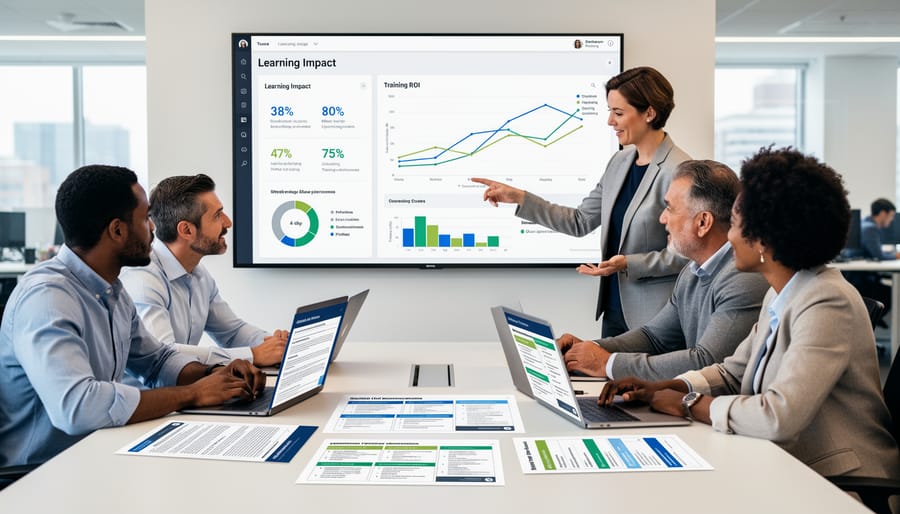
HR analytics in training and development transforms gut feelings and anecdotal feedback into concrete, measurable insights. Instead of relying solely on post-training surveys or informal manager reports, this discipline uses systematic data collection, statistical analysis, and predictive modeling to understand what’s actually working in your learning programs. You track completion rates, skill acquisition metrics, performance changes, and business impact indicators, then analyze those patterns to make smarter decisions about where to invest training dollars and how to design programs that deliver real results.
The difference from traditional training evaluation is substantial. Conventional approaches often stop at Kirkpatrick Level 1 (“Did learners enjoy the course?”) or Level 2 (“Did they pass the quiz?”). HR analytics pushes further, linking training data to performance metrics, retention rates, productivity gains, and revenue impact. You might analyze which onboarding modules correlate with faster time-to-productivity, predict upcoming skill shortages based on workforce trends, or identify which manager training interventions actually reduce turnover in specific departments.
This data-driven approach also enables continuous optimization. Rather than running the same annual compliance training and hoping for the best, you experiment with different formats, durations, and delivery methods, then measure which variations produce stronger knowledge retention or behavior change. You can segment learners by role, experience level, or learning style, personalizing pathways based on what the data shows works for similar employees. The goal isn’t just to prove training happened, it’s to demonstrate that learning investments moved the needle on strategic business goals, from closing critical skill gaps to improving customer satisfaction scores.

Why HR Analytics Certification Matters in 2026
Employers now expect HR professionals to speak the language of data, not just people. As training budgets tighten and stakeholders demand measurable ROI, certification in HR analytics signals that you can move beyond gut instinct to evidence-based decision-making. Formal professional certifications in this field demonstrate you’ve mastered the technical and strategic skills needed to analyze training outcomes, forecast talent needs, and justify L&D investments with hard numbers.
Certification delivers tangible career advantages that self-study rarely matches:
- Employer recognition, Accredited programs carry weight with hiring managers looking for validated analytics expertise
- Recertification credits, Many courses, like ELVTR’s Human Resources Analytics program, offer HRCI-approved credits that keep your existing credentials current
- Demonstrated competency, A certificate proves you can design metrics, build dashboards, and translate data into actionable strategy
- Network access, Programs trusted by tens of thousands of professionals, such as AIHR’s courses, connect you to a global community of practitioners
The job market reflects this shift. Postings for L&D roles increasingly list data literacy, predictive modeling, and analytics platforms as required or preferred qualifications. Without formal training, you risk being passed over for candidates who can prove their capabilities on day one. Certification bridges the gap between traditional HR skills and the analytical rigor organizations now require.
Beyond resume value, structured programs accelerate your learning curve. You gain frameworks for measuring training effectiveness, exposure to industry-standard tools, and feedback from experienced instructors. That combination is hard to replicate on your own, especially when you’re balancing a full-time role. In a competitive field, certification isn’t just a credential, it’s proof you’re ready to lead with data.
Skills and Competencies HR Analytics Programs Teach
HR analytics certifications equip you with a practical toolkit that bridges HR domain knowledge and data science. Programs typically start with data literacy fundamentals: you’ll learn to work with HR datasets, clean and prepare training records, and understand common data structures used in learning management systems. This foundation ensures you can handle real-world L&D data confidently, even if you’ve never touched a spreadsheet formula before.
Metrics design forms a core module in most programs. You’ll master how to define meaningful KPIs for training initiatives, completion rates, time-to-competency, knowledge retention scores, and post-training performance lift. Courses teach you to move beyond vanity metrics and identify indicators that genuinely reflect business impact, such as how upskilling correlates with productivity gains or employee retention.
Expect hands-on training in predictive modeling and statistical analysis. You’ll learn techniques like regression analysis to forecast skill gaps, cohort analysis to identify high-potential learners, and correlation studies that reveal which training formats drive the best outcomes. Programs demystify concepts such as statistical significance and confidence intervals, giving you the language to communicate findings credibly to executives.
Dashboard creation and data visualization skills are essential, and certifications emphasize tools like Excel, Power BI, or Tableau. You’ll practice building executive-friendly dashboards that display training ROI, learner engagement trends, and competency heat maps at a glance. The goal is to transform raw numbers into visual stories that stakeholders can act on immediately.
Perhaps most valuable, programs teach you to translate analytics into L&D strategy. You’ll work through case studies where data insights inform decisions, reallocating budget from low-impact workshops to micro-learning modules, personalizing development paths based on performance data, or justifying new programs with predictive workforce planning. This strategic layer ensures your analytics skills drive tangible improvements, not just reports that gather dust.
Who Should Pursue HR Analytics Training
HR analytics training suits a broader audience than many realize. If you work in HR or talent development and interact with training programs, employee data, or learning budgets, you’re already positioned to benefit from these skills, regardless of your current technical expertise.
HR generalists who want to move beyond administrative tasks and contribute to strategic decisions will find analytics training opens new doors. It equips you to answer questions like “Which training programs actually improve retention?” with data instead of guesswork.
L&D specialists and training coordinators gain tools to measure program ROI, identify skill gaps before they become critical, and make evidence-based recommendations on learning investments. If you design or manage training initiatives, analytics helps you prove their value to leadership.
Talent managers and workforce planners use these skills to connect training outcomes with business performance, forecast future skill needs, and optimize development pathways across teams.
Career changers transitioning into people analytics roles from fields like finance, operations, or research bring transferable analytical thinking. HR analytics training provides the domain knowledge to apply those skills in talent contexts.
Most programs cater to beginners with no prior analytics background, teaching foundational concepts from the ground up. Intermediate-level courses, such as AIHR’s 43.3-hour People Analytics program, assume some familiarity with HR metrics and basic data interpretation. Check course prerequisites carefully, some require only curiosity and a willingness to learn spreadsheet basics, while others expect working knowledge of HR systems or statistical concepts.
You don’t need a statistics degree. You do need interest in using evidence to improve how people learn and grow at work.
How to Choose and Complete an HR Analytics Certification
Choosing the right HR analytics certification starts with clarifying your goals. Ask yourself whether you want to sharpen skills for your current role, pivot into a data-focused L&D position, or earn credentials that signal expertise to employers. Once you know what you’re after, you can narrow down programs that match your experience level and career stage.
Look for accreditation that matters in HR. For example, HRCI-approved programs grant recertification credits recognized across PHR, SPHR, and other certifications, valuable if you already hold HR credentials or plan to pursue them. The ELVTR Human Resources Analytics course, running October 14 to November 24, 2026, is pre-approved for 15 HRCI business recertification hours, making it a practical choice for certified professionals. Accreditation signals quality and ensures your time translates into career currency.
Evaluate the time commitment realistically. The ELVTR course meets twice weekly (Mondays and Wednesdays at 5 PM PT / 8 PM ET) over six weeks, a manageable schedule if you’re working full-time. AIHR’s People Analytics course lists 43.3 hours at an intermediate level, offering flexibility for self-paced learners. Consider your work calendar, personal obligations, and learning style. Live sessions provide real-time interaction and accountability, while on-demand formats let you control the pace.
Review the instructor’s background and course content. Programs taught by practitioners with hands-on analytics experience, like Kelly McFall, HR Data Insights & Innovation Leader at GE Vernova, who leads the ELVTR course, offer applied insights you can’t get from theory alone. Check that the curriculum covers metrics design, dashboard tools, and translating data into strategy, not just statistics in isolation.
When you choose the right certification compare cost against what you’re getting: instructor expertise, accreditation, support, and career services. Pricing reviews and software comparison sites can help benchmark value, especially if the course includes access to analytics tools.
Once you’ve selected a program, the application process is usually straightforward: submit basic information, confirm your eligibility level, and pay tuition. Expect assignments, case studies, and possibly a capstone project. Show up prepared to engage, ask questions, and apply concepts immediately in your work. Completing coursework on time and participating actively will maximize what you gain, and position you to implement analytics the moment you finish.
Leading HR Analytics Training Programs in 2026

Two standout certification options are available now, each designed for different learner needs and career stages.
ELVTR’s Human Resources Analytics course runs from 14 October to 24 November 2026, meeting on Mondays and Wednesdays at 5 PM PT / 8 PM ET. This six-week program is taught by Kelly McFall, HR Data Insights & Innovation Leader at GE Vernova, bringing real-world enterprise analytics experience directly to participants. The course has been pre-approved for 15 Business recertification credit hours toward aPHR, aPHRi, PHR, PHRca, SPHR, GPHR, PHRi and SPHRi recertification through HRCI, making it particularly valuable for professionals maintaining their credentials while building analytics capabilities. The live schedule suits working HR professionals who prefer structured, instructor-led sessions with immediate feedback.
AIHR offers a People Analytics course designed for intermediate learners, with 43.3 hours of content available as an open certificate program. Trusted by over 85,000 HR professionals globally, this option provides flexibility for self-paced learning while still delivering comprehensive analytics training. The intermediate level assumes some familiarity with HR practices but does not require prior data science expertise, positioning it well for L&D specialists ready to deepen their analytical skills.
| Program | Duration | Instructor/Provider | Level | Accreditation | Format |
|---|---|---|---|---|---|
| ELVTR Human Resources Analytics | 6 weeks | Kelly McFall, GE Vernova | All levels | 15 HRCI credits | Live sessions Mon/Wed 5 PM PT |
| AIHR People Analytics | 43.3 hours | AIHR | Intermediate | Open certificate | Self-paced online |
Both programs equip you with the data literacy, metrics design, and predictive modeling skills outlined earlier, but differ in delivery method and credential type. If you value live interaction and need HRCI recertification credits, ELVTR’s cohort-based course starting this October offers a clear path. If flexibility and learning at your own pace matter more, AIHR’s established platform provides proven content refined by tens of thousands of alumni.
Beyond these flagship options, SourceForge maintains updated pricing reviews and comparisons for HR Analytics software tools in Canada, which can help you identify complementary platforms to practice your skills during or after certification.
Cost and Investment Considerations
HR analytics training costs vary widely depending on program format, accreditation status, and instructor credentials. Self-paced online courses from platforms like AIHR typically range from a few hundred to around $1,500, while instructor-led programs with formal HRCI approval, such as the ELVTR Human Resources Analytics course taught by Kelly McFall, often command higher fees, reflecting the value of real-time expert guidance and recertification credits. Course length and depth also influence price: AIHR’s intermediate-level People Analytics certificate requires 43.3 hours of study, whereas ELVTR’s six-week cohort combines live sessions with asynchronous work, and each structure affects both cost and time commitment.
When assessing return on investment, look beyond sticker price to consider what the certification delivers: accredited recertification credits (the ELVTR course offers 15 HRCI credits across multiple designations), access to a professional community (AIHR programs are trusted by over 85,000 HR practitioners), and hands-on projects that build portfolio-ready skills. To inform your budget, review pricing comparisons on sites like SourceForge, which lists HR Analytics software options and cost structures for 2026 in markets such as Canada. Factor in the time you will spend completing coursework, an intermediate program demands substantial hours, and weigh that opportunity cost against the career advancement, salary increase, and strategic capability you gain. A higher upfront investment in a rigorous, accredited program often pays for itself within a year if it opens doors to analytics-focused roles or promotions.
Your Rights, Obligations, and What to Expect
When you enroll in an HR analytics certification, you gain specific rights and take on clear responsibilities. Understanding both helps you get the most from your investment and sets realistic expectations for the journey ahead.
As a learner, you’re entitled to complete access to course materials, instructor support, and any promised recertification credits. For example, the ELVTR Human Resources Analytics course provides 15 HRCI-approved business credits that count toward maintaining PHR, SPHR, and other certifications, a tangible benefit if you already hold credentials. You also have the right to technical assistance, reasonable accommodation for scheduling conflicts, and transparent communication about course requirements.
Your obligations are straightforward but non-negotiable. Most programs require consistent attendance (the ELVTR course meets Mondays and Wednesdays for six weeks) and completion of assignments within stated deadlines. You’ll need to engage with case studies, submit analyses, and often participate in peer discussions. Just as importantly, you’re expected to use what you learn ethically, respecting employee privacy, adhering to data protection laws, and applying analytics to support people rather than surveil them.
Workload varies by program. AIHR’s People Analytics course lists 43.3 hours of content at an intermediate level, which translates to roughly 7-10 hours per week over a typical timeline. Budget time for readings, exercises, and applying concepts to real scenarios.
Post-certification, you’ll often receive a digital badge or certificate, sometimes with ongoing access to updated materials. Many learners integrate their new skills into career management strategies, using analytics credentials to pivot into data-focused HR roles or advance within their current organizations.
Where to Get Help and Additional Resources
If you’re ready to start or advance your HR analytics journey, connecting with the right resources can accelerate your progress and keep you informed as the field evolves. Begin with the official bodies that set industry standards: HRCI offers accreditation guidelines, recertification details, and recognized credit programs, while AIHR provides course catalogs and community forums where you can ask questions and learn from peers. Both organizations maintain up-to-date information on certification requirements and emerging best practices.
Beyond certification providers, a range of resources can support your learning and career development:
- Accreditation websites like HRCI for credit approval and recertification tracking
- Professional HR associations that host webinars, publish research, and offer networking events
- Online learning platforms such as ELVTR and AIHR with structured courses and instructor access
- Career advisors who provide personalized guidance on skill gaps and certification pathways
- Analytics software vendors whose demos and documentation help you understand tools in practice
Additionally, platforms like SourceForge offer software reviews and pricing comparisons for HR analytics tools, helping you understand the technology landscape before you invest in training. Engage with HR analytics communities on LinkedIn or Slack channels where practitioners share case studies, troubleshooting tips, and job leads. Remember that The Career Guide is here to offer ongoing, personalized support tailored to your unique career goals, ensuring you stay on track as you build expertise in this high-demand specialty.
Frequently Asked Questions
What are the main types of HR analytics certifications available in 2026?
Two primary options stand out: the ELVTR Human Resources Analytics course, which offers 15 HRCI-approved recertification credits and runs October 14 through November 24, 2026, and AIHR’s People Analytics course, an intermediate-level program spanning 43.3 hours trusted by over 85,000 HR professionals. Both teach practical analytics skills but differ in format, instructor expertise, and accreditation.
Why does HR analytics certification matter in 2026?
Certification validates your ability to translate training data into business strategy, making you competitive in a job market where employers increasingly demand analytics fluency. It signals credibility, helps you stand apart from other HR candidates, and equips you with the metrics design and predictive modeling skills that traditional L&D experience alone doesn’t provide.
What skills do HR analytics certifications teach?
You’ll master data literacy, statistical analysis, dashboard creation, and predictive modeling specific to training effectiveness. Programs also cover designing meaningful metrics, identifying skill gaps before they impact performance, and building business cases that justify L&D investments with concrete ROI figures.
What cost range should I expect for HR analytics training?
Pricing varies widely based on accreditation, course length, and instructor credentials. While specific figures fluctuate, you can research pricing reviews through platforms like SourceForge to compare HR analytics tools and training investments, then assess ROI by weighing recertification credits and career advancement potential against program fees.
Once you’ve narrowed your certification choice, apply those same data-driven decision principles to your job search. Understanding analytics helps when communicating your value to potential employers, you can quantify training outcomes you’ve influenced and speak their language of metrics. If you’re applying for analytics-heavy HR roles, our cover letter tips can help you frame your certification as proof of both technical skill and strategic thinking, which hiring managers want to see demonstrated upfront.
HR analytics in training and development isn’t just another HR buzzword, it’s a strategic shift in how organizations build capability and measure impact. As data becomes central to every business function, L&D professionals who can translate numbers into smarter training decisions will lead the field. Whether you’re an HR generalist looking to specialize or a talent manager ready to upskill, certification equips you with the tools employers are actively seeking in 2026.
The path forward is clearer than it’s ever been. Programs like ELVTR and AIHR offer structured, credible routes to mastery, complete with recertification credits and practical application. The investment, whether in time, money, or effort, pays dividends in career mobility and influence.
You don’t have to navigate this alone. The Career Guide is here to support your growth with personalized advice, updated resources, and guidance tailored to your unique career stage. Take the first step: explore a certification program, assess your skill gaps, and commit to becoming the data-savvy HR professional your organization needs. Your next career move starts now.