
Your cover letter serves as your personal pitch before the interview—a chance to explain not just what you’ve done, but why you’re genuinely interested in this specific role at this particular company. While your resume lists your qualifications, your cover letter connects the dots between your experience and the employer’s needs, showing hiring managers you’ve done your homework and understand what they’re looking for.
The reality is that many hiring managers still read cover letters, and they often use them as a deciding factor between similarly qualified candidates. When recruiters review hundreds of applications, a compelling cover letter helps you stand out by showcasing your personality, communication skills, and cultural fit—qualities that don’t come through in bullet points alone.
However, not every application requires the same level of effort. Some companies explicitly state they don’t read cover letters, while others make them optional. Understanding when to invest your time strategically can make your job search more efficient without sacrificing opportunities.
The key is knowing which situations demand a customized cover letter and which allow for a more streamlined approach. Career changers, applicants with employment gaps, and those targeting competitive positions benefit most from strong cover letters that address potential concerns proactively. Meanwhile, high-volume applications for entry-level roles may warrant a different strategy.
This guide will show you exactly why cover letters matter in today’s job market, when they’re essential versus optional, and how to make yours work harder for you.
Cover Letters Give You a Voice Beyond Your Resume
Your resume is a powerful document, but it’s also limited by its format. Those bullet points and job titles tell employers what you’ve done, but they don’t reveal who you are or why you’re genuinely excited about this specific opportunity. That’s where your cover letter becomes invaluable—it gives you a voice that brings your professional story to life.
Think of your resume as the facts and your cover letter as the narrative that connects those facts into a compelling story. While your resume states that you transitioned from retail management to project coordination, your cover letter explains how managing a team during a store renovation sparked your passion for coordinating complex timelines and stakeholder communication. That context transforms a potentially confusing career move into a logical progression that makes perfect sense.
This is especially valuable if you’re making a career change or have gaps in your employment history. Your cover letter allows you to address these situations proactively and positively, rather than leaving hiring managers to draw their own conclusions.
Beyond storytelling, your cover letter showcases your communication skills in action. While your resume might list “excellent written communication” as a skill, your cover letter proves it. The way you structure your thoughts, maintain a professional yet personable tone, and articulate your value demonstrates competencies that bullet points simply cannot capture.
For recent graduates, this is particularly powerful. You might not have extensive work experience yet, but your cover letter lets you highlight relevant coursework, volunteer work, or personal projects that demonstrate your capabilities. It allows you to connect your academic achievements to real-world applications and show enthusiasm that energizes your candidacy.
Your cover letter isn’t just another required document—it’s your opportunity to be more than a list of qualifications. It’s where you become a person worth meeting.

They Demonstrate Your Genuine Interest in the Specific Role
In today’s competitive job market, hiring managers can instantly spot the difference between a candidate who truly wants the position and someone who’s simply clicking “apply” on dozens of postings. A well-crafted cover letter serves as your opportunity to prove you’re in the first category.
When you take the time to personalize your cover letter, you’re sending a clear message: this isn’t just another application in your mass-submission strategy. You’ve done your homework. You understand what the company does, what challenges they face, and how you can contribute to their specific goals. This level of engagement immediately sets you apart from candidates using generic, one-size-fits-all applications.
Consider the practical difference. A generic cover letter might say, “I’m excited about this marketing position and believe I’d be a great fit.” A personalized one demonstrates genuine interest: “I noticed your recent expansion into sustainable product lines, and my three years managing eco-friendly campaigns at GreenTech Solutions has given me specific experience navigating the consumer education challenges you’re likely facing.”
To demonstrate authentic interest effectively, reference specific projects the company has launched, mention recent news or achievements, or connect your experience to their stated values and mission. You might discuss how a particular aspect of their company culture resonates with your professional philosophy, or explain why their approach to a industry challenge aligns with your own expertise.
This personalization requires research and effort, which is precisely the point. You’re investing time because this opportunity matters to you. Hiring managers recognize and appreciate this investment. It shows you’re selective about where you apply, that you’ve carefully considered whether this role aligns with your career goals, and that you’re genuinely motivated to contribute to their organization’s success rather than just seeking any available position.
Cover Letters Bridge Gaps in Your Professional Story
Your resume tells the story of where you’ve been, but sometimes the path isn’t perfectly linear. That’s where cover letters become invaluable tools for taking control of your narrative. Rather than leaving hiring managers to draw their own conclusions about gaps or transitions, a cover letter lets you address potential concerns head-on with context and confidence.
Think of your cover letter as your opportunity to connect the dots. Maybe you took time off to care for a family member, or perhaps you’re making a bold career pivot into a new industry. Whatever your situation, these circumstances don’t diminish your value as a candidate—they just need explanation. A well-crafted cover letter transforms what might appear as a red flag on your resume into a compelling part of your professional journey.
Cover letters are particularly effective for addressing:
- Employment gaps due to health issues, family care, or personal development
- Career changes from one industry to another seemingly unrelated field
- Geographic relocation and your commitment to the new location
- Returning to the workforce after extended time away
- Overqualification concerns or stepping into less senior roles
- Unconventional educational backgrounds or non-traditional career paths
When you proactively frame these situations, you demonstrate self-awareness and communication skills that employers value. You’re showing that you understand how your background might be perceived while articulating why you’re still the right fit. This approach is far more effective than hoping the hiring manager won’t notice or will give you the benefit of the doubt.
The key is brevity and positivity. Acknowledge the situation in one or two sentences, then quickly pivot to what you learned, how you grew, or why this position aligns perfectly with your goals despite—or even because of—your unique path. You’re not making excuses; you’re providing context that strengthens your candidacy.

They Showcase Skills That Resumes Can’t Capture
Written Communication as a Career Asset
In today’s workplace, strong written communication skills are non-negotiable. Whether you’re drafting emails, creating reports, or collaborating across digital platforms, your ability to express ideas clearly and professionally directly impacts your effectiveness. Your cover letter serves as tangible proof of these capabilities before you ever set foot in an interview.
Think of your cover letter as a writing sample that every employer reviews. It demonstrates your ability to organize thoughts logically, convey information concisely, and adapt your tone to a professional context. Hiring managers pay attention to grammar, structure, and clarity because these elements reflect how you’ll represent the company in client communications, internal memos, and team collaborations.
This is especially valuable for recent graduates and career changers who may lack extensive industry experience. A well-crafted cover letter immediately signals that you can communicate at a professional level, which helps offset any gaps in your resume. Even in technical or hands-on roles, written communication matters. You’ll need to document processes, update stakeholders, and contribute to team discussions in writing.
By investing time in a polished cover letter, you’re not just applying for one job—you’re showcasing a fundamental skill that will serve you throughout your entire career journey.
Your Ability to Follow Instructions
When a job posting specifically requests a cover letter and you skip it, you’re sending an immediate signal: you either didn’t read the instructions carefully or chose to ignore them. Neither impression helps your candidacy.
Think of it this way—hiring managers use application requirements as a simple screening mechanism. If you can’t follow basic instructions during the application process, how will you handle detailed project requirements, client specifications, or workplace protocols? Your willingness to submit a requested cover letter demonstrates you pay attention to details and respect the process.
This matters more than you might think. In many organizations, the ability to follow directions precisely is a foundational skill. Project managers need team members who read briefs thoroughly. Client-facing roles require professionals who execute exactly what’s requested. Even creative positions demand attention to guidelines and deadlines.
By submitting a complete application package as requested, you’re already distinguishing yourself from candidates who cut corners. You’re showing potential employers that when they ask for something, you deliver—a quality every hiring manager values from day one.
When Cover Letters Matter Most (And When They Don’t)
Not every job application demands the same level of effort when it comes to cover letters. Understanding when to invest your time strategically can make your job search more efficient without compromising your chances.
Let’s break down where cover letters truly matter. Career changers need them most—if you’re pivoting industries or roles, a cover letter bridges the gap between your past experience and future aspirations. It’s your opportunity to explain how your transferable skills apply to this new direction. Similarly, applications for competitive positions at smaller companies (under 100 employees) almost always warrant a cover letter. These organizations often have more personalized hiring processes, and decision-makers genuinely read what you submit.
| Situation | Cover Letter Priority | Why |
|---|---|---|
| Career change or industry pivot | Essential | Explains your transition story |
| Small companies or startups | Essential | Personal review by hiring managers |
| Direct applications via company website | Recommended | Shows genuine interest in specific company |
| Quick-apply job boards (one-click) | Optional | System may not deliver it effectively |
| Internal referrals or networking hires | Optional | Relationship carries more weight |
When applying directly through a company’s website, cover letters remain important—they demonstrate you’ve taken time to research the organization rather than mass-applying. Creative industries like marketing, communications, and publishing typically expect them as demonstrations of your writing ability.
However, you can deprioritize cover letters when using one-click application systems on major job boards, where they often get lost in automated filters. If you’re applying to very large corporations with highly structured HR processes, your resume and application form responses may matter more. When you have a strong internal referral, your connection’s endorsement typically carries more weight than your written introduction.
Recent graduates face mixed expectations—some entry-level positions expect enthusiasm shown through cover letters, while others focus primarily on coursework and internships listed in your resume. When in doubt, include one for roles you’re genuinely excited about.
What Happens When You Skip the Cover Letter
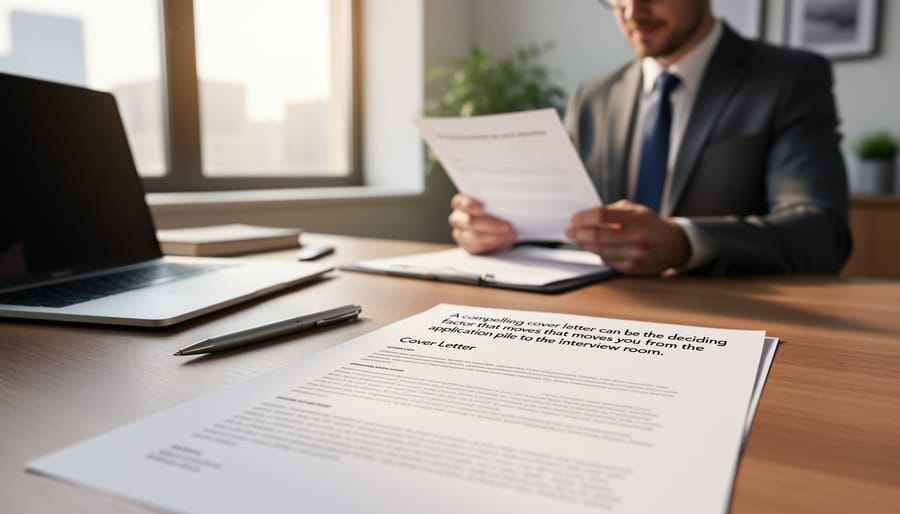
Let’s be honest about what happens when you skip the cover letter. The consequences vary depending on your situation, but understanding them helps you make strategic decisions about your job search.
When a job posting explicitly requests a cover letter and you don’t submit one, you’re signaling that you either can’t follow instructions or didn’t consider the position important enough to comply. Many hiring managers will remove your application from consideration immediately. This isn’t being harsh; it’s simply using an easy filter when they’re sorting through hundreds of applications.
For competitive positions where multiple qualified candidates apply, skipping the cover letter often means your resume gets less attention. Think about it from the hiring manager’s perspective: when they’re comparing two equally qualified candidates and one took the time to explain their interest while the other didn’t, who seems more engaged? The cover letter writer typically wins that comparison.
Here’s where it gets more nuanced. If you’re applying through a job board that doesn’t request a cover letter, or you’re in certain industries like tech startups or retail, the impact of skipping it is usually minimal. Many companies in these sectors focus primarily on portfolios, skills assessments, or quick-apply systems where cover letters genuinely aren’t expected.
Similarly, if you’re applying for entry-level positions at large companies with automated applicant tracking systems, your resume keywords matter more than a cover letter they may never read.
The takeaway? Skipping a cover letter when it’s requested or when applying for competitive roles significantly hurts your chances. But for casual applications or industries that don’t emphasize them, you’re probably fine prioritizing your time elsewhere. Understanding this distinction helps you work smarter, not harder.
Here’s the truth: in today’s competitive job market, a well-crafted cover letter isn’t just another hoop to jump through—it’s your chance to stand out when dozens of qualified candidates are applying for the same position. While it might feel like extra work, especially when you’re juggling multiple applications, this is where you can shift the odds in your favor.
Think of your cover letter as a strategic opportunity rather than an obligation. Your resume lists what you’ve done, but your cover letter explains why it matters to this specific employer. It’s where you demonstrate that you’ve done your homework, that you understand their challenges, and that you’re genuinely invested in contributing to their team. In a sea of generic applications, that personalization is powerful.
The reality is that hiring managers remember candidates who make authentic connections. They remember the person who took time to understand their company culture and articulated exactly how their skills align with the role. That’s the competitive edge you’re looking for.
Yes, not every application requires a cover letter, and that’s okay. But when you’re pursuing roles that truly excite you—positions where you can see yourself thriving—investing that extra effort demonstrates commitment that employers value. You’re not just another applicant; you’re someone who cares enough to make your case thoughtfully.
Take control of your career narrative. Make those personalized connections. The jobs worth having are worth the effort to pursue them properly.